
If it’s made from the tea plant, Camellia sinensis, it contains caffeine. That covers all black, green, white and oolong tea, including flavoured blends. Fruit and herbal infusions made only from fruits, flowers, herbs and spices contain no caffeine. The exact amount in a cup of tea varies a lot, so treat any single figure as a rough guide.
In short
- Black, green, white and oolong tea all contain caffeine.
- Fruit and herbal infusions made without tea leaves are naturally caffeine-free.
- Blends can mix the two, so always check the ingredients.
- How much caffeine reaches your cup depends on the leaf, how much you use, the water temperature and how long you brew.
Teas that contain caffeine
All four types of tea come from the same plant, and caffeine occurs naturally in its leaves:
- Black tea
- Green tea, including flavoured green teas such as mint or fruit blends
- White tea
- Oolong tea
It’s easy to assume a fruity name means no caffeine. Our Mediterranean Tea is full of cranberries, cherry and rosemary, but it’s built on green tea buds, so it contains caffeine.
Infusions that are caffeine-free
Infusions made only from fruits, flowers, herbs and spices contain no tea leaves, so they are naturally caffeine-free. Familiar examples include apple, rosehip, hibiscus, chamomile, ginger and cinnamon.
A few plants brewed like herbal teas are exceptions. Yerba maté, for example, contains caffeine, although less than the teas tested in one laboratory study (Komes et al., 2009). Read more about fruit and herbal infusions.
Why caffeine figures vary so much
You’ll see very different caffeine numbers quoted for tea. That’s because several things change how much ends up in your cup:
- The leaf itself. Young buds and leaves tend to be richer in caffeine. In one laboratory study, a white tea made from young buds had the highest caffeine content of the teas tested (Komes et al., 2009).
- How much you use. More leaf means more caffeine.
- Water temperature and brewing time. Hotter water and longer brewing draw out more caffeine. A 2026 study of green and black tea found that both higher temperatures and longer steeping increased caffeine extraction (Lembono et al., 2026).
- How you measure. Studies use different methods, which is another reason published figures differ.
As a reference point, the NHS uses around 75mg of caffeine for a mug of tea (Tommy’s, citing NHS guidance). Your cup could be more or less.
The white tea myth
White tea is often described as the lowest-caffeine tea. That isn’t reliable: because it’s made from young buds and leaves, some white teas contain as much caffeine as other teas, or more (Komes et al., 2009). If you’re avoiding caffeine, choose a caffeine-free infusion instead. Read more about white tea.
Can I reduce the caffeine in my cup?
You can make a lighter cup by using a little less leaf, cooler water and a shorter brew, all of which draw out less caffeine (Lembono et al., 2026). It won’t make tea caffeine-free.
Decaffeinated vs naturally caffeine-free
- Decaffeinated tea is real tea that has been through a process to remove caffeine.
- Naturally caffeine-free infusions never contained caffeine in the first place.
We don’t currently sell decaffeinated tea. Our caffeine-free blends are all fruit and herbal infusions.
Caffeine and pregnancy
The NHS advises keeping caffeine below 200mg a day during pregnancy, and tea counts towards it (Tommy’s, citing NHS guidance). If you’re pregnant or have been advised to limit caffeine, follow the guidance from your midwife or GP. Caffeine-free fruit and herbal infusions are an easy swap.
Some herbal ingredients carry their own advice in pregnancy. If you’re pregnant, check the ingredients of any herbal infusion with your midwife or GP.
Our blends at a glance
| Blend | Type | Caffeine |
|---|---|---|
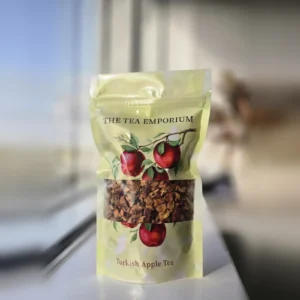
| Turkish Apple Tea | Fruit infusion | Caffeine-free |
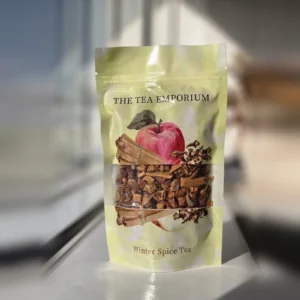
| Winter Spice Tea | Fruit and spice infusion | Caffeine-free |
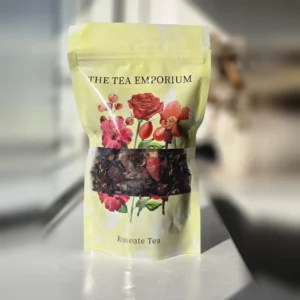
| Roseate Tea | Fruit and floral infusion | Caffeine-free |
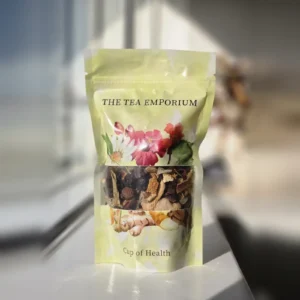
| Ginger Turmeric | Herbal and spice infusion | Caffeine-free |
| Mint & Lemon Green Tea | Green tea blend | Contains caffeine |
| Mediterranean Tea | Green tea blend | Contains caffeine |
The Six-Blend Tasting Set includes all six: four caffeine-free and two with caffeine. The Winter Warmers Gift Set is all caffeine-free.
In summary
If it’s tea, it has caffeine; if it’s purely fruit, flowers, herbs or spices, it doesn’t. When in doubt, read the ingredients.
- Fruit & Herbal Teas
Turkish Apple Tea
£10.00 / 100g
Tasters from £3.00Sweet, tangy baked appleCaffeine-freeChoose size This product has multiple variants. The options may be chosen on the product page - Fruit & Herbal Teas
Winter Spice Tea
£10.00 / 100g
Tasters from £3.00Warm cinnamon, baked apple and a hint of cloveCaffeine-freeChoose size This product has multiple variants. The options may be chosen on the product page - Fruit & Herbal Teas
Roseate Tea
£10.00 / 100g
Tasters from £3.00Floral rose and tart berries; brews ruby redCaffeine-freeChoose size This product has multiple variants. The options may be chosen on the product page - Fruit & Herbal Teas
Ginger Turmeric Tea
£10.00 / 100g
Tasters from £3.00Spicy ginger, tangy hibiscus and soft chamomileCaffeine-freeChoose size This product has multiple variants. The options may be chosen on the product page
Looking for a cup with no caffeine at all? Read our guide to caffeine-free loose leaf tea, including how caffeine-free differs from decaf.
Sources
- Komes et al. (2009), Determination of caffeine content in tea and maté tea by using different methods, Czech Journal of Food Sciences
- Lembono et al. (2026), The Effects of Brewing Condition on Tea’s Caffeine Content and Sensory Quality, Jurnal Mutu Pangan 13(1)
- Tommy’s: Limiting your caffeine intake in pregnancy (NHS guidance)
← Back to the Tea Guide · How to brew loose leaf tea · Shop our teas